From the Studio: Leslie Johnsen
Beauty is the only thing worth aiming at.
09.6.2026

Your career has taken you from working with Claude Montana in Paris to executive roles at Comme des Garçons, Barneys New York, Prada, and Givenchy. Looking back, what experiences most shaped the way you think about creativity and running a brand today?
I wore a Catholic school uniform throughout my early formal years of being educated. By the time I was an undergraduate at CU Boulder at the tail end of the Vietnam War, I felt “like letting my freak flag fly.” By chance, and a French boyfriend, I happened to land a freelance showroom job at Claude Montana because I met his commercial director at a wedding in Normandy. I was wearing head-to-toe Yohji Yamamoto, and as I spoke both English and French, I fit the right profile to sell cutting-edge fashion to Neiman Marcus (Dallas), Ultimo (Chicago), and Maxfield (LA). Montana was a member of the young French fashion renegades at the time, shaking up Paris along with Thierry Mugler, Jean-Paul Gaultier, and Azzedine Alaïa. I understood the value in that way of dressing: the power woman padded shoulders, waspy-waisted jackets, pencil skirts, and towering stilettos. But personally, this display of 80s feminism spoke less to my wannabee hippie-ness than Rei and Yohji’s “Japanese invasion.” My most formative years were at Comme des Garçons and Prada, both fashion brands with women at their helms, and both independents……not a part of today’s luxury group dynamics. Purists. They were the real McCoys.
You have worked with some of fashion's most influential brands during periods of tremendous cultural change. What did those years teach you about building a brand that endures beyond trends?
More precisely, I would say that I worked for leading brands at their peak. The only one that has retained a godlike level is Comme des Garçons. Working for the brands I worked for, I never had to push or pay for privileges. I had to make strategic choices with a less-is-more credo and hold the roof down. I said no more often than yes. Rei and Miuccia paved their own unique pathways, and they were glorious. When the international press corps landed in Milan back in the day, they didn’t even check in at their hotel. They had their drivers take them straight from the airport to the via della Spiga Prada boutique, ravaging it with their 30% discounts + 20% VAT refunds. Working for Kawakubo-san and Miuccia, I learned that you need to know who you are, believe in yourself, and stay true to your point of view even when others don’t get it. One shouldn’t hope to be everything for everybody. And back then, fashion was only available to an elite segment of the population, and it flourished because of it.
Throughout your career you've moved fluidly between fashion, retail, communications, consulting, and education. Was that multidisciplinary path intentional, or did each opportunity naturally lead to the next?
My career path was organic, and many industry people didn’t get my multi-disciplinary background. I wasn’t ambitious. I just had a very strong Midwestern work ethic. I also have a golden rule: to give credit where credit is due. I moved with the opportunities that were presented to me, and through those 30+ years working on all sides of the business, I learned that the PRs aren’t crazy and the commercial people aren’t boring. Everyone serves a purpose. The fashion arena, though smaller, was overtly competitive and more often bitchy, if not downright cruel. I remember feeling that if I went away on holiday for 2 weeks in a row, someone might be sitting in my chair when I returned. Working in NYC is as good as a university education for finding solutions to anything. Japan is about perfectionist craftwork. Italian tradespeople will never say no, only that it might be difficult, and then produce the most beautiful stuff you could ever imagine. And the French, let’s just say that Gallic pride can sometimes overshadow their work. Why I’m teaching today is certainly not for the paycheck. It’s because I have something to give to young aspirational people that’s not academic.
You now live in rural France in a restored seventeenth-century chapel. How has that change of pace and place influenced the way you think about design, beauty, and daily life?
Holy cow (no pun intended)! Let me first point out that the chapel I lovingly transformed into a dwelling sits in the middle of a field. I’m surrounded by pastoral serenity. Quite secluded. It’s the size of a New York City one-bedroom apartment, but instead of car horns and ambulance sirens, I hear wind in the trees and owls hooting at night. I always yearned to be in nature, and as I aged out of the urban workforce, retreating from the big cities of New York and Paris to a tiny sacred building seemed like divine destiny. The chapel project is ongoing. Last year, I nearly doubled my space, with the addition of an apsidiole atelier, and next year I hope to add a north-facing terrace with an outdoor shower overlooking my forest of oaks, beech, hornbeam, and chestnut where wild endangered red squirrels, hedgehogs, red foxes, European hare, and roe deer live. I have lizards and toads whom I’ve given names like Ozbourne and Tidily Winks. They are my uninvited but welcome visitors. My daily routine is negotiating not only with linen weavers and ironmongers, but Mother Nature. Beauty is what I live for. Living here is like a page-turning fairytale.
You and Roman have known each other for many years. Can you tell us how you met and how you have worked together in the past to arrive at this collaboration?
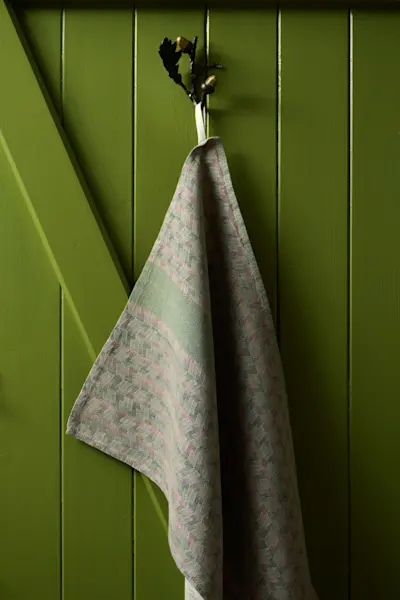
Roman and I met in New York at a dinner at Raoul’s in SoHo. It was in the late 80s. I was working for Comme des Garçons at the time, and he was already at Barneys. When I was hired as the women’s designer buyer for Barneys, our friendship grew, and I met Steven working there too. We were part of our own mutual admiration society. When Roman moved to LA, I met his wonderful gang of friends, most notably Lisa Eisner, and they invited me to join them on projects they produced for The New York Times, as well as for their wonderful book publishing venture, Greybull Press. I even did a short tenure directing the studio staff at Commune before the housing crisis in 2008. Roman has always been encouraging about my creative side. He rang me a few years ago while I was consulting on a Franco-Italian Riviera garden project, wondering if I would like to develop some products for Commune’s clientele. Thus, the Austrian jacquard linens and wood-turned pieces from Desmond Corcoran featured on the pages of the e-shop. In fact, it’s because of Roman that CHAPELLE INDUSTRY came to be.
Your new venture, Chapelle Industry, feels like a natural evolution of your career. What inspired you to start the company, and what opportunity did you see that wasn't being addressed elsewhere?
Luxury is hurting. Fashion designers are being moved around like pawns because the big publicly traded groups can’t make money fast enough. That was not the world I was drawn to when I bought my first precious pieces from Comme des Garçons, some of which I gave to the Met’s Costume Institute under Harold Koda’s reign, and others which I jobbed out to Allan and Suzy as my closets weren’t big enough. The population of the planet has doubled since I was born. I want to make beautiful things to live with over lifetimes.
Chapelle Industry extends beyond fashion into the home. What drew you toward home goods, and how do you think people connect with objects differently in their homes than they do through clothing?
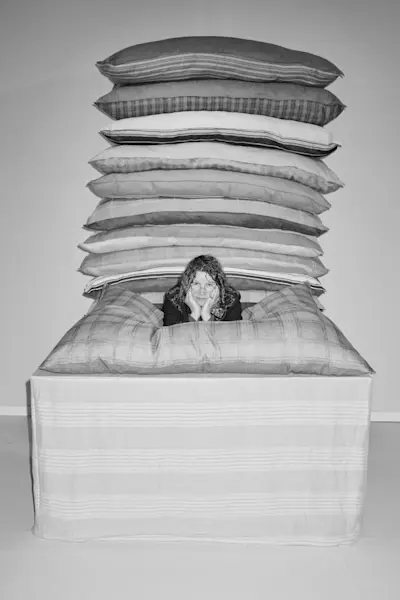
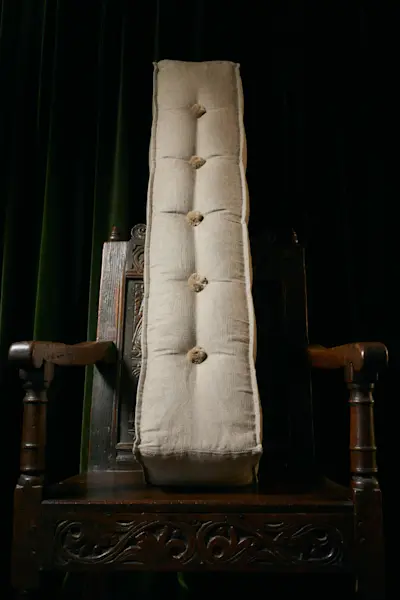
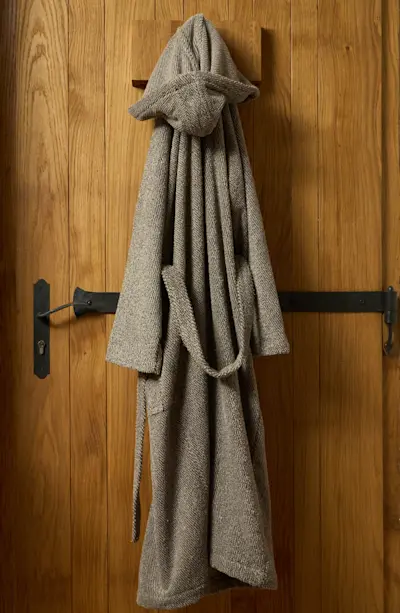
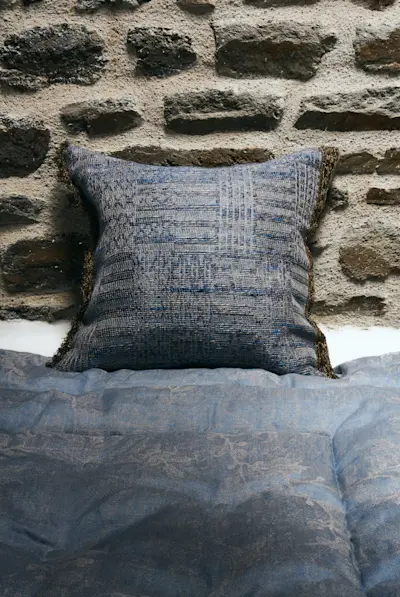
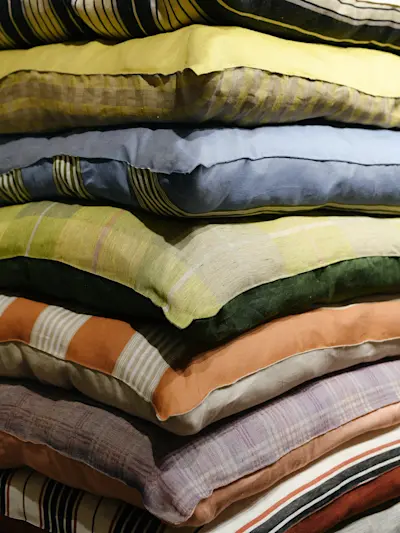
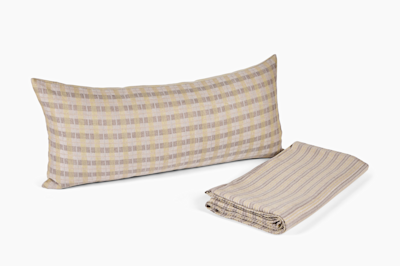
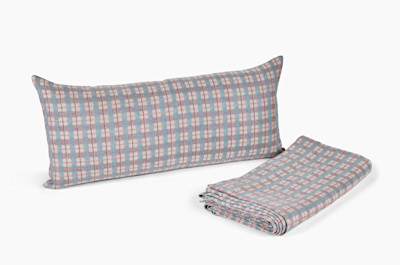
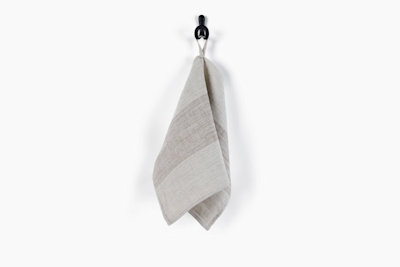
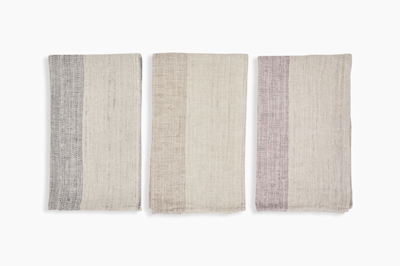
Everybody needs to get dressed, but no one in their right mind should be shopping at H&M today. I buy my socks from Falke and my underwear from Eres. The rest of my wardrobe is made up of heritage pieces from my past which will last as long as I do. I do not need new Manolo Blahniks anymore, though there were places and times for my zebra-striped mules. Somehow, I cannot part with them, nor my original Jil Sander handmade brogues in dark brown, cream with grosgrain laces, and bright pink. Kitchen towels, napkins, cushions, and counterpanes filled with goose down, light as a feather, and warm as the eiderdowns of old Europe, make more sense to me today. And I hope they make people happy with their beauty and utilitarianism. They are truly artisanal. European craft of yore.
You've spent decades helping shape the identities of luxury brands. When creating your own products, how do you decide what deserves to be made, and just as importantly, what doesn't?
A beautiful image in my mind’s eye deserves to come to life if I can find the artisans to help me. That takes imagination and daring. Things are mulling around my mind that will eventually be made. One needs to be patient. That’s the hardest part. Waiting to see how something turns out, and what changes might be needed to perfect it. Or what imperfections are perfect. A king-size four-season 250g/m2 goose down-filled counterpane is not a mass-market product. It’s truly a luxury item, and, ordered by the right person, it will be passed down from generation to generation.
Your work often seems to celebrate craftsmanship and everyday rituals. Are there particular historical objects, vernacular traditions, or handmade techniques that continue to inspire the Chapelle Industry collection?
I slept under my first real eiderdown bed quilt when I was nineteen in Vienna. My weaver is the last Austrian jacquard weaver standing. When I couldn’t find silks wide enough to upholster my counterpanes without seams, he developed a super high thread count uber-light jacquard for me. The linen ended up adding a contemporaneity that silk taffeta or satin would have squelched. Historic household items made new again. You have no idea how many people stopped by my stand at MATTER and SHAPE for the launch of CHAPELLE INDUSTRY, remembering their grandmother’s eiderdowns. This kind of nostalgia warms my cockles.
As someone who has witnessed the evolution of luxury fashion from the 1980s to today, what changes have been the most meaningful—and what values do you think the industry should reclaim?
Beauty is the only thing worth aiming at. I have friends still working in luxury fashion, one notably with Matthieu Blazy at Chanel. BINGO!
Teaching at Parsons Paris allows you to work with the next generation of designers. What advice do you find yourself giving students most often, and has teaching changed your own perspective on creativity?
Some of my students might dream of being one of the next generation of designers, but they have learned from me that they will more likely work for years as unpaid interns making photocopies, getting coffees, and picking up pins before maybe one day getting a break as a paid assistant in a Parisian design studio. Most will branch off into management roles like PR or “clienteling,” for God’s sake. Teaching has been satisfying for me because I can finally give something worthwhile back after all those years in the field: experience. I hope my students long to come to my class weekly and leave with things to reflect on many years later. Today, what I learned over three decades between New York, Paris, Milan, London, and Tokyo is coming back to me via CHAPELLE INDUSTRY.
Interview by David Kasprzak