In the Studio: Zoe Dering
01.31.2026

Can you tell us a bit about your background and how you began a ceramics practice?
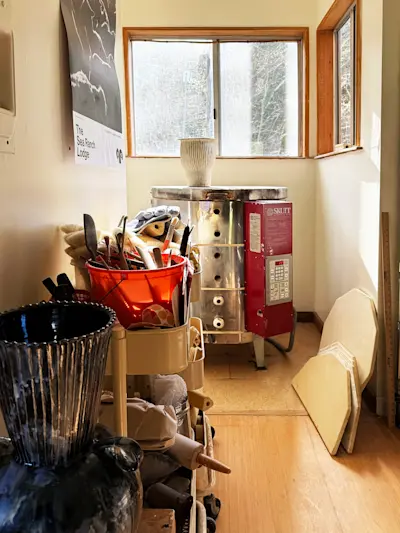
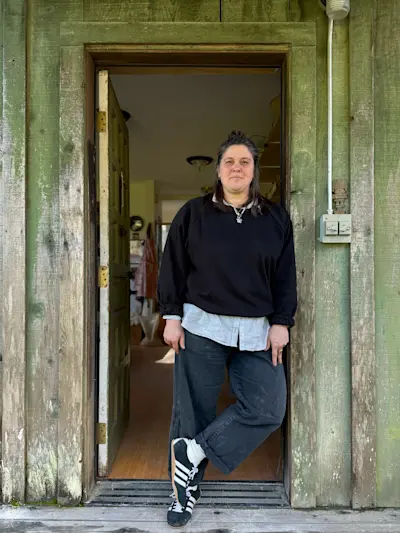
Before I started in ceramics, I was a Pastry Chef for almost a decade. I trained as a pastry chef and started working in restaurants and bakeries at 18 years old. It was a great career, but I often felt like I missed out on the more exploratory aspects of your early 20's. At some point towards the end of that career, I was feeling stagnant creatively and took a wheel throwing class to shake things up. I took to the medium almost immediately and started spending as much time in the ceramics studio as I could in my free time. When I finally quit pastry it wasn't an immediate shift into making ceramics full time. It was a fairly clunky period of transition for me, but over the course of a few years I became a member at a studio and eventually moved my ceramics practice into my home and the rest is history.
Transitioning from a pastry chef to a ceramic artist somehow feels like a logical progression. Do you recognize any connections in the two practices. Did one inform the other, or are they completely separate modes of making?
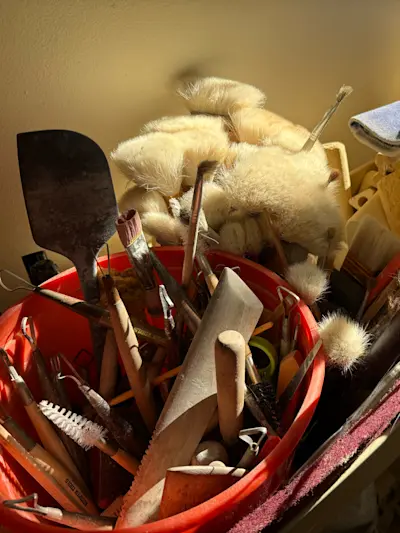
The chef-to-ceramicist pipeline is a very real thing! On a fundamental level I think that both practices are rooted in repetition. In kitchens you follow a myriad of small systems within the larger network of a kitchen and dining room, and they all add up to whether or not the overall organism functions well. I see something similar in running a ceramics studio, there are a million repetitive tasks that become the foundation for being able to execute an idea successfully. The act of producing functional ceramics is also in itself repetitive in the same way baking a large batch of something is. From a technical standpoint I think baking and ceramics are also extremely similar in that the foundational skills are essential to being able to execute something well. Without understanding the basic science behind it you won't be able to lead with intuition or develop a unique voice in the medium.
I know teaching others is an important part of your process. Has it always been this way or is this something that you have discovered more recently?
I think teaching makes me a better potter. I have been teaching at a public studio once a week for about 7 or 8 years now and love my students. It was challenging at first to learn how to articulate the technical side of pottery and in doing so I've been able to refine my own practice. I love to see the projects that people make and as a result I end up getting to make so many things I wouldn't otherwise think of trying; it can be inspirational. In my own studio practice I spend most of my time alone, which I'm well suited to, but teaching allows me to meet so many people I wouldn't otherwise cross paths with and I think there's been a great value in that. I really believe that anyone trying to improve their craft should try teaching it.
We share an affinity for exquisitely produced art objects with a fictional purpose. I think this is present in all of the makers that Commune collaborates with, but it seems very important that your work, in particular, gets used and not just admired. Why are functional objects important to you?
I'm a sucker for functional home objects. I absolutely love them. It's easy to overlook the design and intention that goes into everyday objects, like a mug for example, but if you ask anyone they will tell you which item in their cupboard is they're favorite. People will tell you how perfect the handle feels in their hand or how the lip feels when you drink out of it. In a well-made object that none of that is by accident. The functional details of an object might remain quiet to the user, but the effect is loud if done right. I find all of this to be fascinating and love what an individual experience it is for each person.
During our visit we took a field trip to a warehouse full of collectibles, vintage clothes, junk, and more! Is there something specific that you collect, and does the act of collecting inform your ceramics practice in any way?
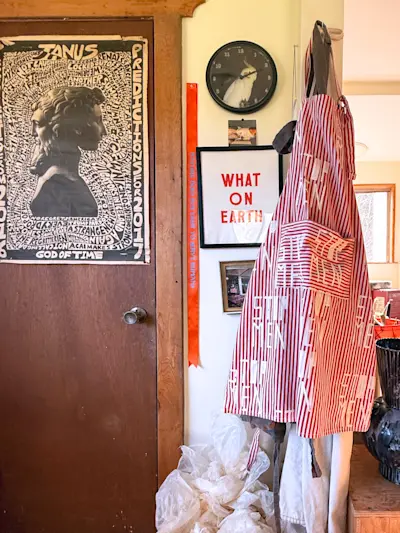
There isn't any one thing in particular that I collect, per se. I do however collect items that lend themselves to entertaining and a fun tablescape. Tablecloths are a favorite of mine, vases, unique serving vessels, candle sticks, etc. No aesthetic or design concept drives what I collect so long as I find it fun and beautiful. If an object has humor, even better. I'm often inspired by functional objects that aren't made of ceramic and take a lot of inspiration from objects made of metal or glass, for instance. I firmly believe that not all forms are meant for all mediums and it’s fun to take what you can from other mediums and incorporate those elements into my ceramic work.
How did you first come to work with Commune?
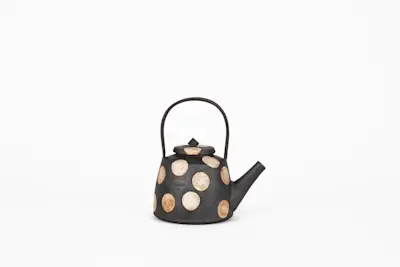
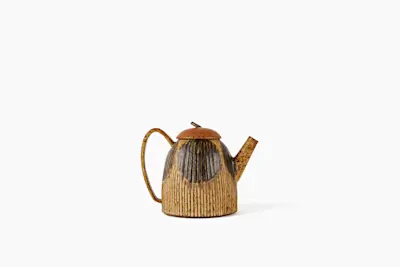
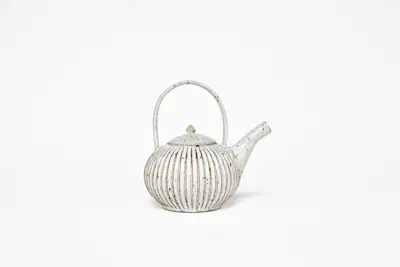
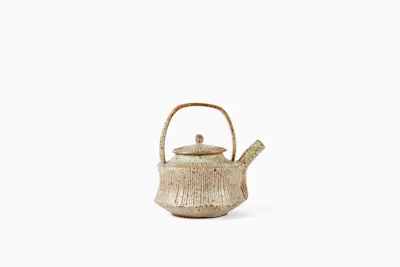
I had admired Commune for a long time and as luck would have it my partner had done some work with them in the past. I was deep in a teapot making phase and was saying how I really wanted them to go somewhere special and my husband introduced me to Roman. After a studio visit, we began working together.
What are you focused on this year, in the studio and otherwise?
Since your visit I've signed the lease on a new, bigger studio! I'm excited to get that set up. It will give me space to work bigger, host more in person events and maybe even open up some opportunities to teach out of my own space. I spent the past year or so really trying to zero in on what is and isn't working in my practice and how to grow it in ways that feel holistic, which is hard to do considering the constantly shifting social and political climate (the horrors) and oddly enough I am feeling optimistic for the coming year. I've become increasingly interested in home hardware and want to explore that more by incorporating cast metals into my work. I have always prioritized evolution over stability when it comes to my work and my focus looking forward is on expansion of my studio work, practically and existentially.
Do you have a dream project or collaboration?
More so than a specific project or collaboration I'd like to continue to work with people and designers who allow me to continue to grow as an artist and craftsperson.
Interview by David Kasprzak
See Zoe's available work on Commune Shop!