Maybeck’s Outlier
Redwood, Denim, and the Difficult Whole
05.9.2026
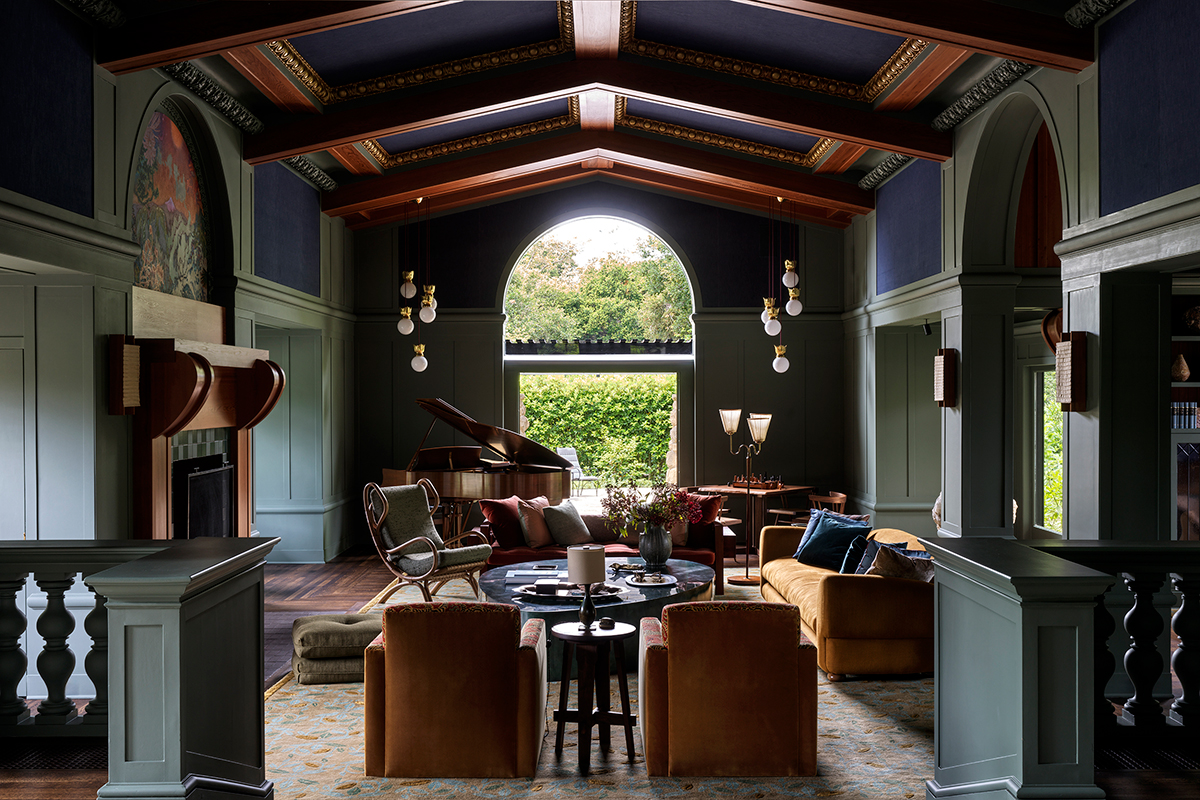
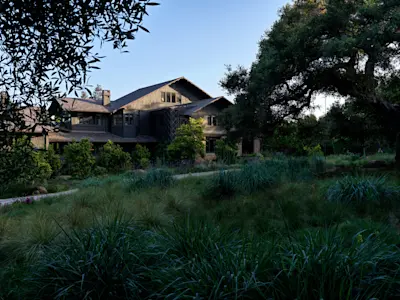
This essay explores our recent renovation of Maybeck’s 1916 Bingham House in Central California. It is Maybeck’s only project on California’s central coast and is widely considered an outlier within an already varied and eccentric body of work.
Before getting into the house itself, it helps to begin somewhere slightly unexpected: with the writings of Robert Venturi, the father of Postmodernism. Not an obvious starting point, but it usefully reframes the problem we found ourselves working through…
In Complexity and Contradiction in Architecture, Robert Venturi describes contradiction as a design strategy, coining the term the “difficult whole.” He was writing in the late 1960’s, at a moment when architecture seemed to have reached a dead end. Modernism, reductive by nature, had pushed toward an ever tighter set of formal and material constraints, leaving little new territory to explore. In response to this crisis, Venturi turned to history in search of latent possibilities and alternative ways of thinking that might spark his new movement. It was a pivotal shift that helped the architectural profession turn a page, even if the aesthetic merits of what followed remain deeply contested.
In the book he makes a brief, almost passing reference to Bernard Maybeck as an early example of the ‘difficult whole,’ contrasting Maybeck’s idiosyncratic approach with the totalizing language of Frank Lloyd Wright. Wright’s argument for a unified design language, for all its power, struggled to gracefully accommodate the practical demands of living. Industrially produced fixtures like toilets and faucets, and the accumulating bric-a-brac of daily life often register as compromises against his highly controlled palette and geometries. Maybeck’s work offers a more generous alternative, one that collages techniques from disparate eras and places, more seamlessly bringing inevitable contingencies into the fold. For Venturi, it suggested an inclusive, kaleidoscopic version of modernism that never fully took hold—the path not traveled[1].
A student of the Ecole De Beaux Arts, Maybeck remained radically open-minded about his architectural influences throughout his career. This, however, didn’t mean that his work was unprincipled. His correspondences and late-life interviews reveal that he insisted on ‘sincerity’ above all else. For him, this was a catch-all term for an unpretentious architecture that was honest about its materiality, structure, and purpose. Unlike the manifestos of his contemporaries—like Le Corbusier’s “Five Points of Architecture” and Frank Lloyd Wright’s Prairie Style—Maybeck’s philosophy did not dictate a specific form or style. Rather, it offered an open-ended framework for interpreting the requirements of each project, planting the seeds for many of his signature innovations.
He was among the first designers to use redwood as an interior finish. Thanks to their abundance and size, redwood trees had long been milled for columns, beams and decking in California; but the wood was considered too unrefined a material for decorative use. As a result, these structural members were typically clad with more expensive hardwoods like birch, maple, oak, and mahogany. Not only did Maybeck leave the redwood beams and columns exposed, he frequently used redwood for wall paneling and cabinetry. In doing so, he dissolved the hierarchy between the hidden systems that shape space and those that articulate and decorate its surfaces.
He continued to innovate along this line, by incorporating industrially made products into the ornamentation of his buildings. He used prefabricated steel sashes for the art-glass windows in his Christian Science Church in Berkeley, and, in the same project, he cast Romanesque columns out of concrete. These moves built a bridge between the 12th-century churches that inspired Maybeck and his modern context, producing something wholly original. Each is transformed in the process: the historical is stripped of nostalgia, while industrial materials are elevated beyond utility into something symbolic. Sincerity, in this case, is about the building authentically expressing its intended function: being the spiritual home for a 20th century congregation. And so, what seems like freewheeling invention is, in fact, the result of a consistent philosophical position. It is here that the breadth and possibility of Maybeck’s architectural thinking becomes most evident.
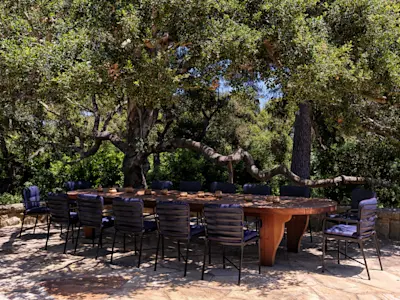
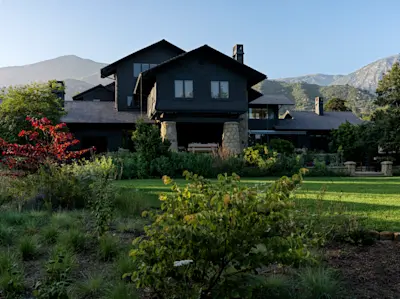
The Bingham House, similarly, tests the limits of Maybeck’s philosophy. The natural wood shingles, generous eaves and cast concrete chimneys feel familiar enough to the casual Maybeck student. But, the house is an outlier among his residential work in almost every other respect. Historians often attribute this divergence to the unusually assertive role of the client. Letters from UC Berkeley’s Maybeck archive reveal the Binghams as a constant presence on site, weighing in on decisions down to the placement of electrical outlets. Most notably, they passed on Maybeck’s signature redwood interior in favor of prim birch paneling and raw silk wall coverings in pursuit of a more conventional sense of luxury. Among their list of requirements for the house was a pipe organ and, more abstractly, connection to the surrounding landscape.
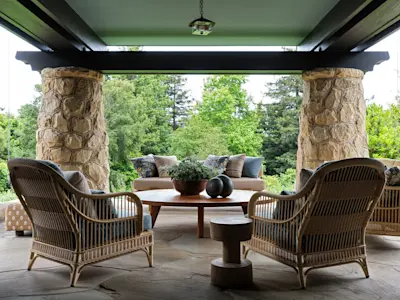
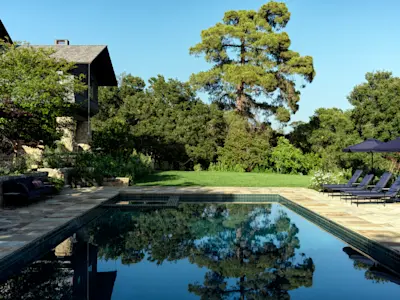
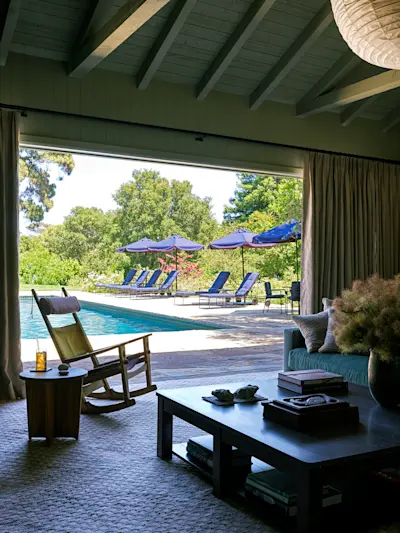
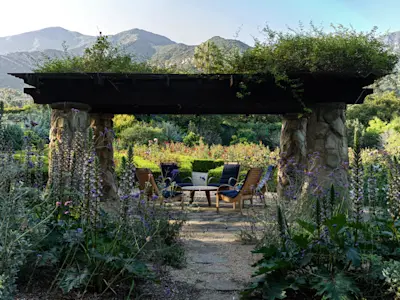
Rather than classifying the house as a pure aberration, it may be more useful to frame the Binghams’ demands as a stress test for Maybeck’s approach—a moment where the idea of the “difficult whole” is pushed to its limit. Maybeck is not only reconciling function, form, and context, but also incorporating a forceful client perspective into the architectural logic of the project. In search of a solution, he tapped into his Beaux Arts training and adopted a cruciform plan. This allowed him to harness the organizational clarity of churches to absorb the project’s competing demands. It was a marked departure from the compact, puzzle-like quality of his hillside Berkeley houses, but the conditions were different here too. The site is broad, flat, and open to the Santa Ynez Mountains. With space to breathe, the building reaches outward, its axes terminating in patios and colonnades that draw the landscape in.
Within this ecclesiastical framework, elements that might otherwise feel incongruous begin to align. The formality of the plan accommodates the Binghams’ preference for grandeur, while the small chapel-like annex off the central living space provides a natural home for a pipe organ at the center of the family’s life. Details like egg and dart moldings, and silk-lined coffers satisfy the Binghams’ tastes without feeling pretentious. What could read as opulence instead feels calibrated to the scale and formal language of the building.
The cruciform plan is not an eccentric relic dug up from the past, but a precise instrument allowing Maybeck to synthesize a wide range of inputs into a coherent whole. The result is a Maybeck-designed house with very few of the physical characteristics of his other work. It invisibly deploys his philosophy of sincerity to navigate a client and brief that are at odds with his core instincts. This raises a productive question: does this added layer of negotiation make the building more “Maybeck,” or less?
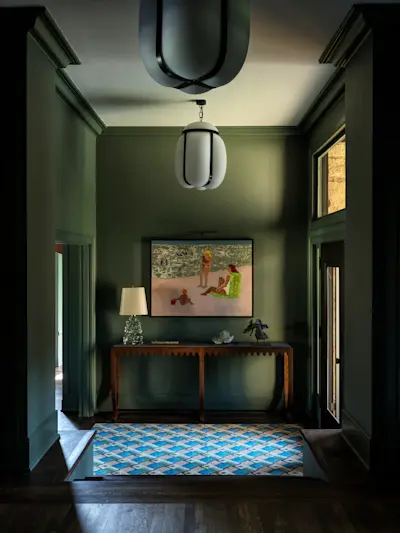
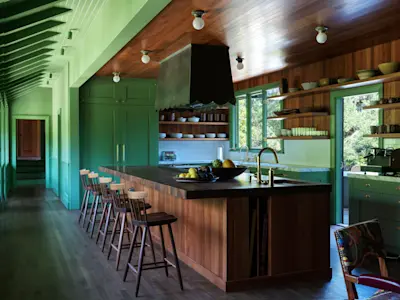
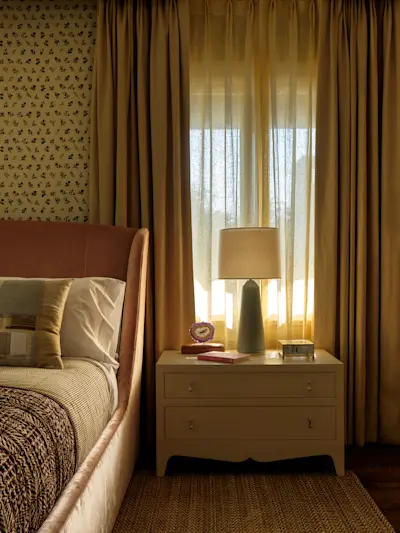
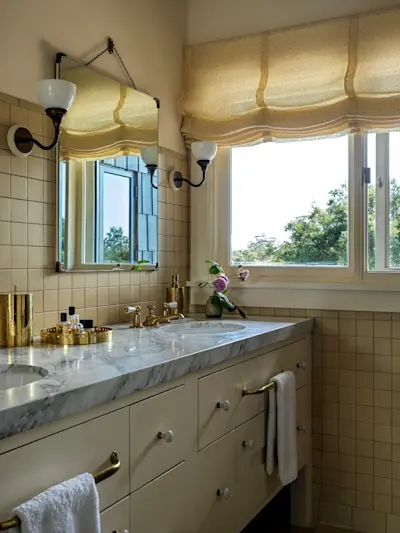
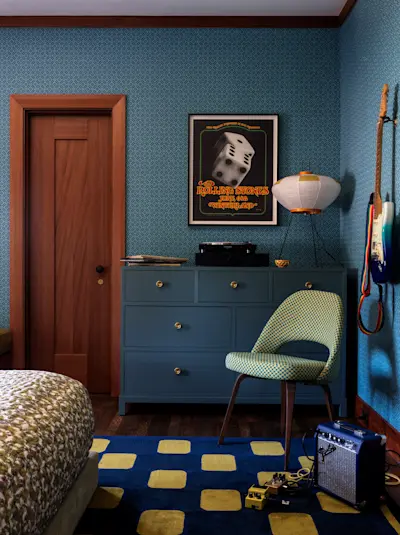
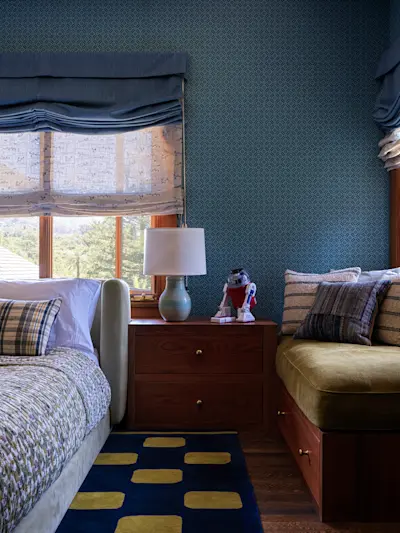
A century later, we found ourselves circling that same question, tasked with renovating the Bingham House for longtime clients and their two daughters. If Maybeck’s work suggested an architecture capable of absorbing contradiction, this project would test that idea under very different conditions. The building’s many craft details had been overwritten by previous owners, and the interior wood had been quite literally whitewashed. Despite the flattening effect of the stark white paint, the project’s complexity had only compounded with time.
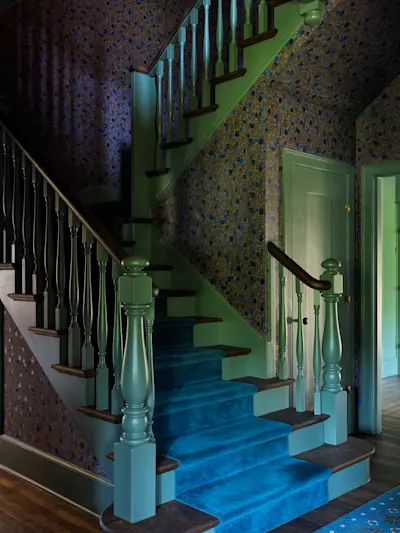
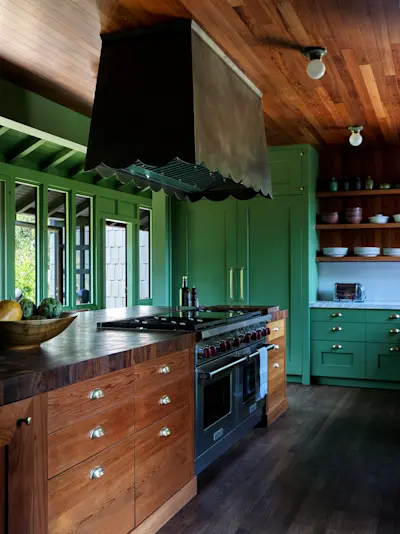
A wholesale restoration would have meant stripping the house back to its original birch paneling, reconstructing what had been lost, and sourcing reproduction fixtures. It was not only prohibitively expensive, but ultimately felt artificial. It ignored the lived history of the place and denied the present needs of our clients. We placed our first stake in the ground: this would be a home, not a museum. It would be updated to be livable and to continue as a source of joy and peace for those who inhabit it. What felt more faithful was an approach capable of navigating these accumulated layers and incorporating them into a new whole. And this time, Maybeck’s original panacea, the cruciform plan, would not be enough. There could be no singular gesture to overwrite everything. Instead, the project would need to be held together by an intricate web of connections, linking past and present, makers and materials, and the different lives that have unfolded within the house.
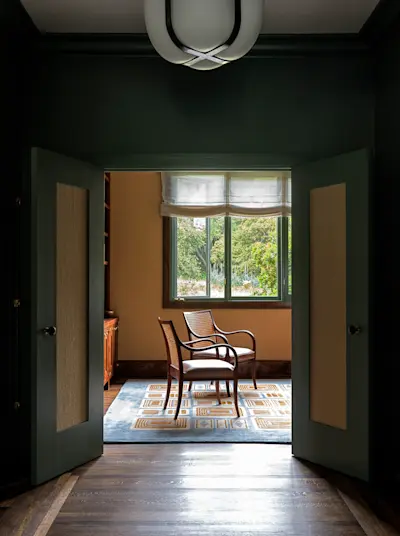
From this position, we looked outward. We identified furniture makers working around the same time as Maybeck, who were also exploring the relationship between craftsmanship and production in the wake of the Industrial Revolution. Our modern-day vantage point allowed us to draw connections between Maybeck and his contemporaries like Josef Frank, Josef Hoffmann, and Adolf Loos. We paired their works with pieces from our own network of artisans who continue to build on the legacy of these early craft movements.
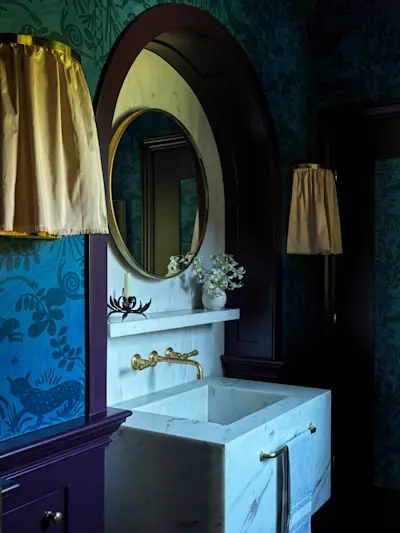
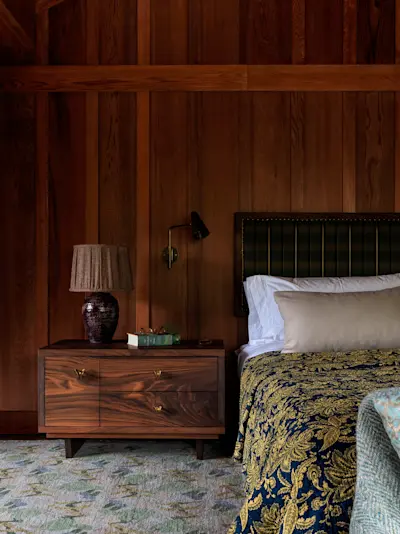
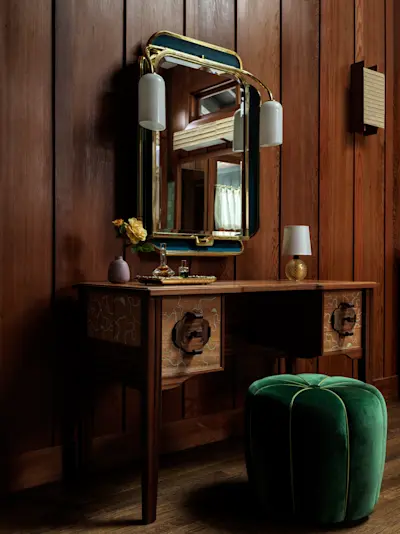
Woka light fixtures from Austria’s Wiener Werkstätte are used throughout the home, providing a historically grounded backdrop against which other lighting elements interact. Many of the Woka pieces feature flouncy silk shades, suspended like skirts from brass fittings, gently diffusing the light. Alongside them, Fernando Santangelo’s pleated linen and redwood sconces introduce a more relaxed counterpoint, loosening the historic reference without breaking it. In this way, the lighting strategy becomes a dialogue between Woka’s faithful reproductions and Santangelo’s modern reinterpretation.
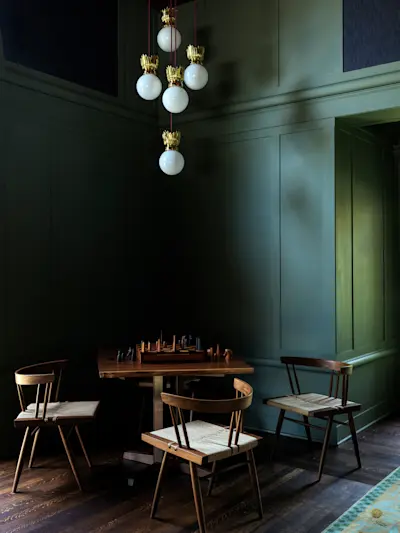
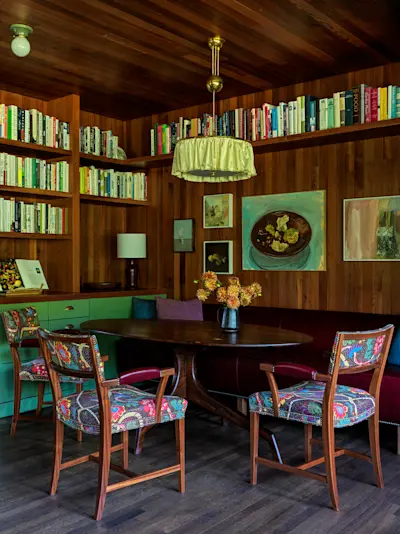
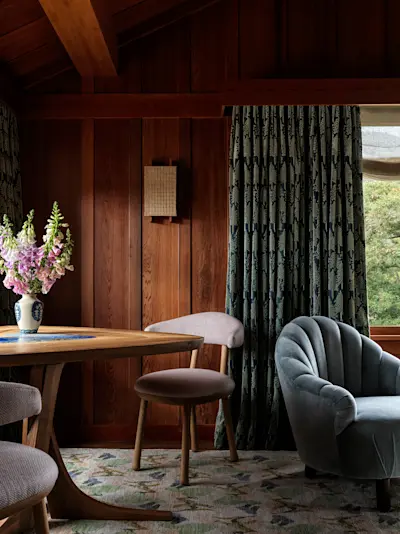
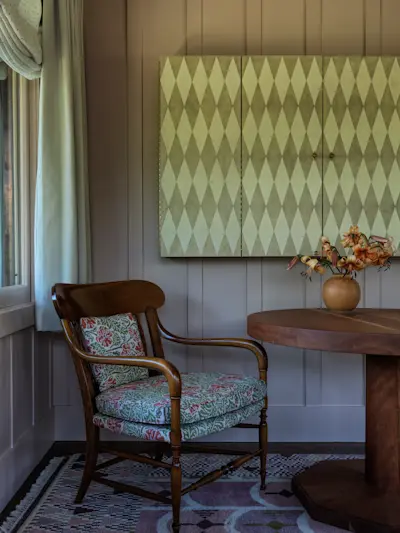
In the kitchen dining nook, Josef Frank’s chairs gather around a custom Espenet dining table by Tripp Carpenter, from Bolinas, California. The table itself is based on an original design by Arthur Espenet Carpenter, Tripp’s father. Arthur was a pivotal figure in California furniture-making who helped elevate the craft to fine art. These are the kinds of cascading ties that form a web binding the project together.
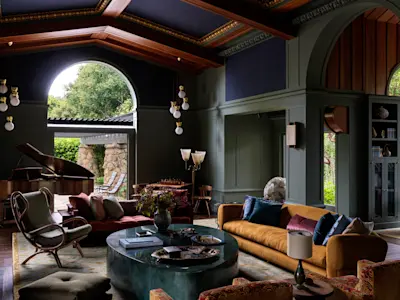
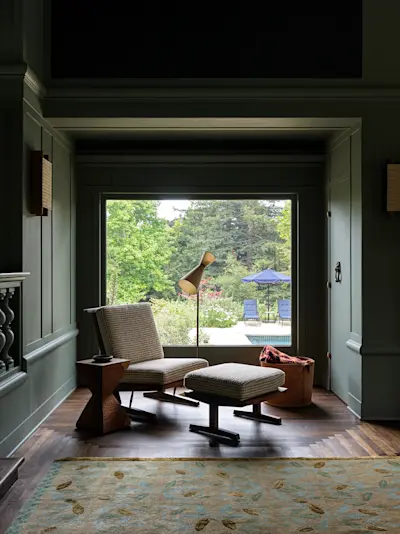
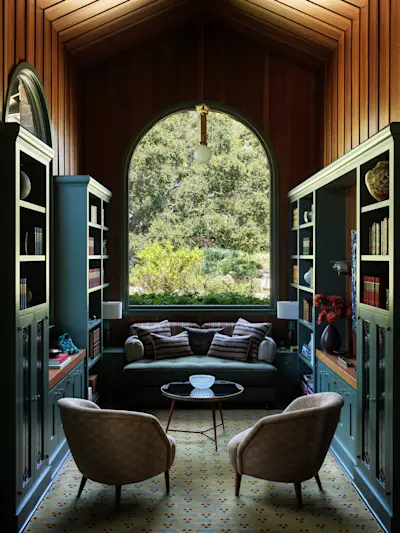
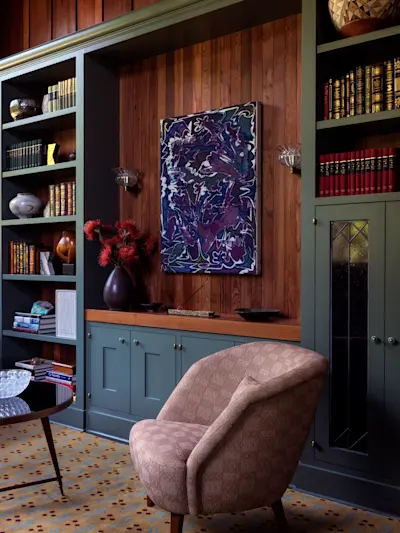
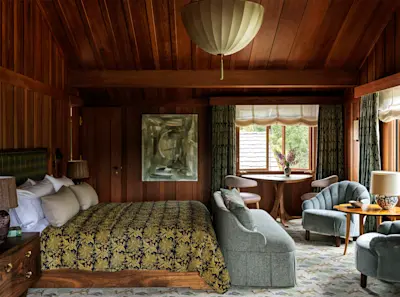
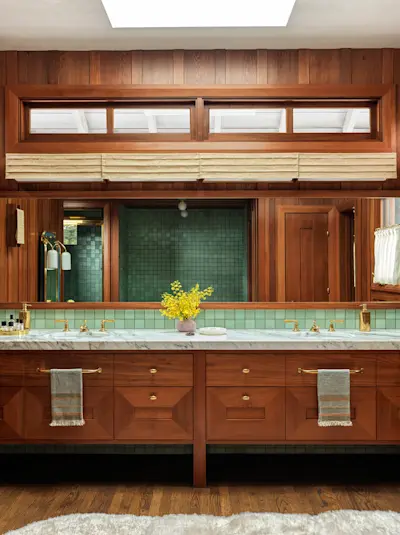
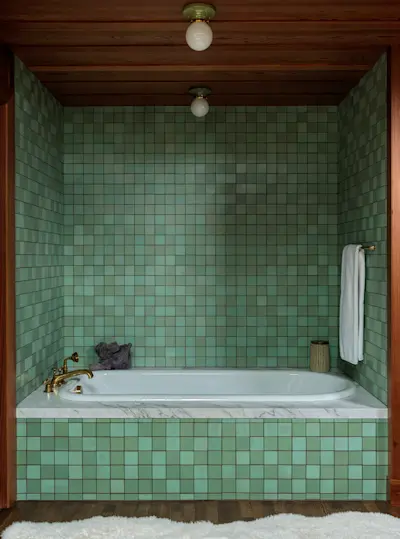
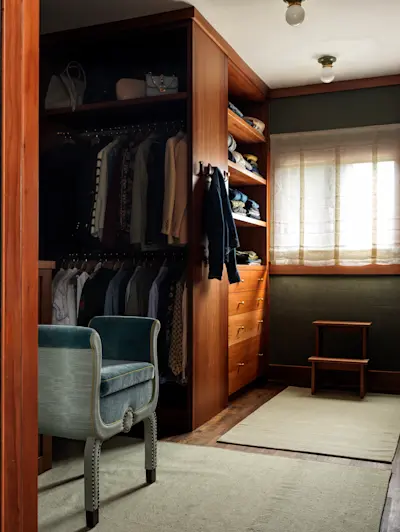
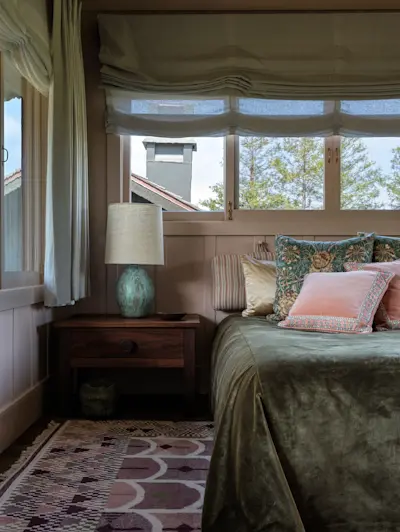
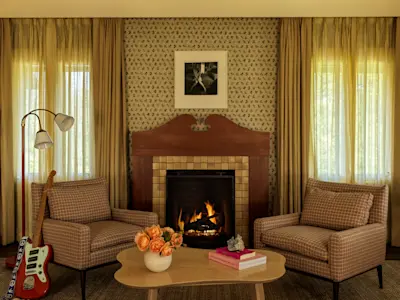
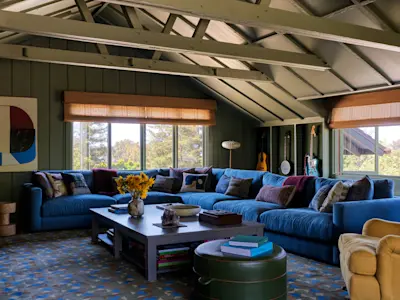
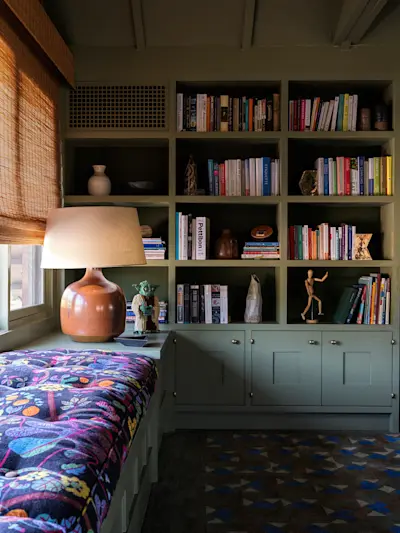
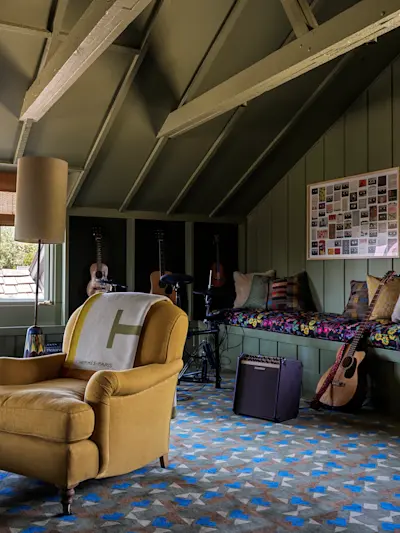
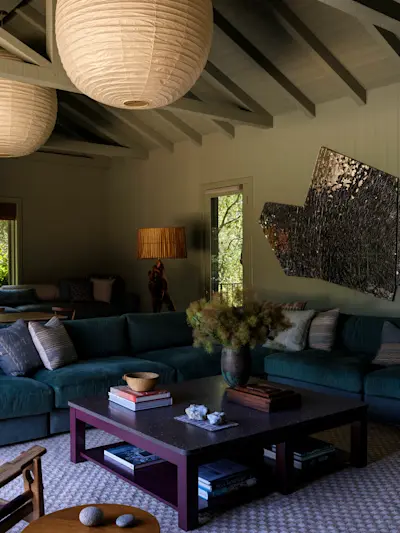
One of the strongest connections in the home is between our clients and the original owners—something we discovered while studying Maybeck’s correspondences. Both families shared a love for music, a desire for connection to the surrounding landscape, and an active investment in shaping the future of the house. The original owners feel most present in the central living room, which we retained as a space for family and music. It is now organized around our clients’ guitar collection and a grand piano. The former organ niche became a library as a nod to our clients’ love for reading. The existing birch, long since painted white, was preserved and repainted in a palette drawn from the surrounding landscape. Our new wood paneling throughout the house is consistently redwood, a return to Maybeck’s preference for the material. Together, these moves begin to encode the house, making the history of its renovation legible: the original birch transformed, the new woodwork clearly marked, each layer distinct yet constantly interacting.
In building out the rest of the room’s material palette, we returned to redwood not only as a finish, but as a philosophical touchstone. Just as Maybeck elevated redwood from a rough framing material to a decorative surface, we sought finishes that might still subvert expectations today. In place of the silk that once lined the upper frieze and ceiling coffers, we introduced denim. It echoes the color and softness of the original material, but reads as a modern and surprisingly humble counterpoint to the classical ceiling.
Like Maybeck’s use of redwood, denim reflects an indifference to conventional hierarchies of materials. Cotton denim is historically associated with workwear, the kind of fabric the carpenters and masons might have worn while constructing the house in 1915. Its use as a decorative finish in the home’s most formal space subtly acknowledges the otherwise invisible labor that gives buildings their shape. At the same time, this is not standard, commercially produced denim. It is loomed in small batches and hand-dyed with natural indigo by Kufri. The variegation and hand-made quality of the denim panels register even from fifteen feet below. Like knotted redwood boards, their imperfections become a feature rather than a defect, while the cultural associations embedded within the material remain intact.
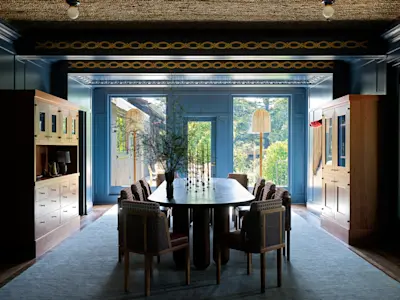
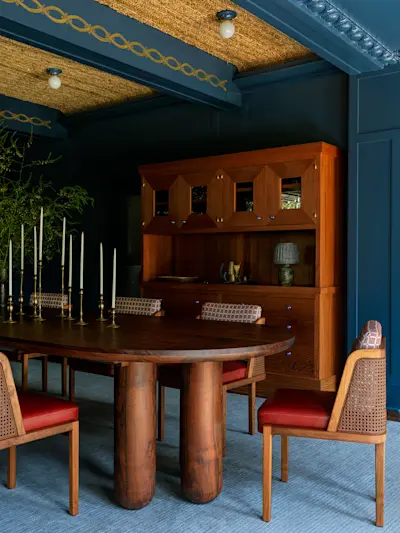
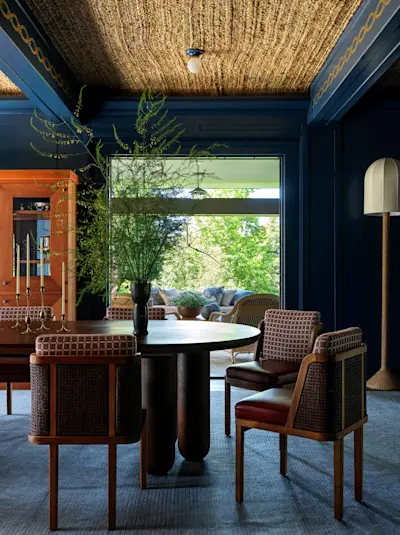
A few steps up from the central music hall is a formal dining room. The ceilings are lower here, with Maybeck’s sturdy beams hovering close overhead. We clad the spaces between the beams with custom-woven rush mats by Rush Matters in England. Rush recurs across eras—from ancient Egypt to the Middle Ages to Danish modernism. In each of its iterations, it remains fundamentally utilitarian: a protective mat, an underlayer, something soft underfoot, and always easily replaced. Here, that logic is reversed. The lowered ceiling brings it closer, allowing the texture of its looping irregular brairds to be noticed. Even its scent becomes part of the atmosphere of the room. These are the kinds of nuances Maybeck’s work was built to hold.
Returning to Venturi, the gulf between his reading of Maybeck and what followed becomes clearer. In much of postmodernism, history is reduced to fragments—flattened, symbolic, held at a distance, as if in quotation marks. There is a sense of irony that reads as insincere, everything sitting at the surface. Maybeck’s work operates differently. It has little to do with style, and more to do with holding things in relation and transforming them in the process.
Perhaps his relegation to the footnotes of architectural history has as much to do with this position as anything else. Maybeck rarely wrote about his work or attempted to codify it, even as others defined movements around his work. He continued to move on, testing new forms and loosening any fixed language as soon as it began to take hold. His architecture welcomes participation—whether from the Binghams, our clients, or the makers and craftsmen who shape the space. Multifaceted and open-ended, it allows the cultural connotations of a fabric, the plan of a long-forgotten church, and the scent of woven rush to exist together as a single difficult whole.
Text by Ashley Takacs
Photography by Chris Mottalini
Bibliography
Gray. “Art: The Great Romantic.” Time, June 14, 1971. https://time.com/archive/6613243/art-the-great-romantic/.
“Bernard Maybeck.” American Heritage, August/September 1981. https://www.americanheritage.com/bernard-maybeck.
Bockhorst Productions. Bernard Maybeck: Visionary Architect. Documentary film. DVD. Bockhorst Productions, 2002.
University of California, Berkeley Library. Bernard Maybeck Papers. Manuscript collection. College of Environmental Design Archives.
Venturi, Robert. Complexity and Contradiction in Architecture. New York: Museum of Modern Art, 1966.
Woodbridge, Sally Byrne. Bernard Maybeck: Visionary Architect. New York: Abbeville Press, 1992. Wodehouse, Lawrence. *Bernard Maybeck: Artisan, Architect, Artist*. New York: Abbeville Press, 1999.
[1] Perhaps Maybeck’s relegation to the footnotes of architectural history was more a failure of self-promotion, than a condemnation of the designs themselves. Unlike the more dogmatic architects of his time, Bernard Maybeck rarely wrote about his work, preferring to let the buildings speak for themselves. Though he is credited with developing the Berkeley shingle style, he was not the one to define or codify it. That role fell to his friend and early client, the poet Charles Keeler, who articulated the ideals represented in his Maybeck-designed residence in his book The Simple Home. The book became a foundational text for the arts and crafts movement, and a manifesto for the Hillside Club, a sort of proto-HOA in the Berkeley hills. Even as these ideas took hold, and Maybeck’s admirers filled the hills with their own interpretations, he had already moved on. He continued to explore new forms, often breaking the very rules that Keeler had laid out in his name. Reflecting on his work during an interview with Time Magazine, Maybeck seemed unbothered by the contradictions between the Hillside ethos and his own evolving work. For him, design was less about authorship or adherence than about holding onto his core values and letting the rest go.